



Extreme winter journey: After travelling around 4,000 kilometres through the ice desert in northern Canada, Martin Brucker and his travel partner reach the Arctic Ocean in Tuktoyaktuk on their motorcycles.
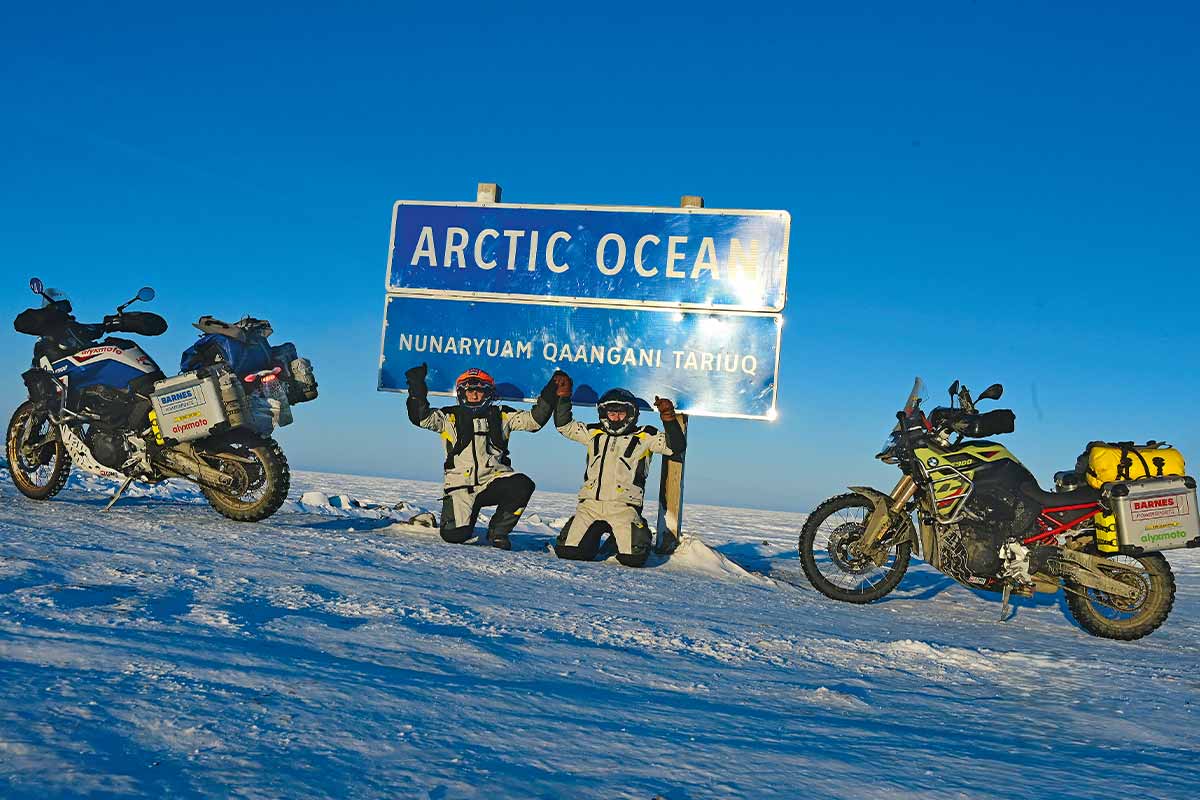
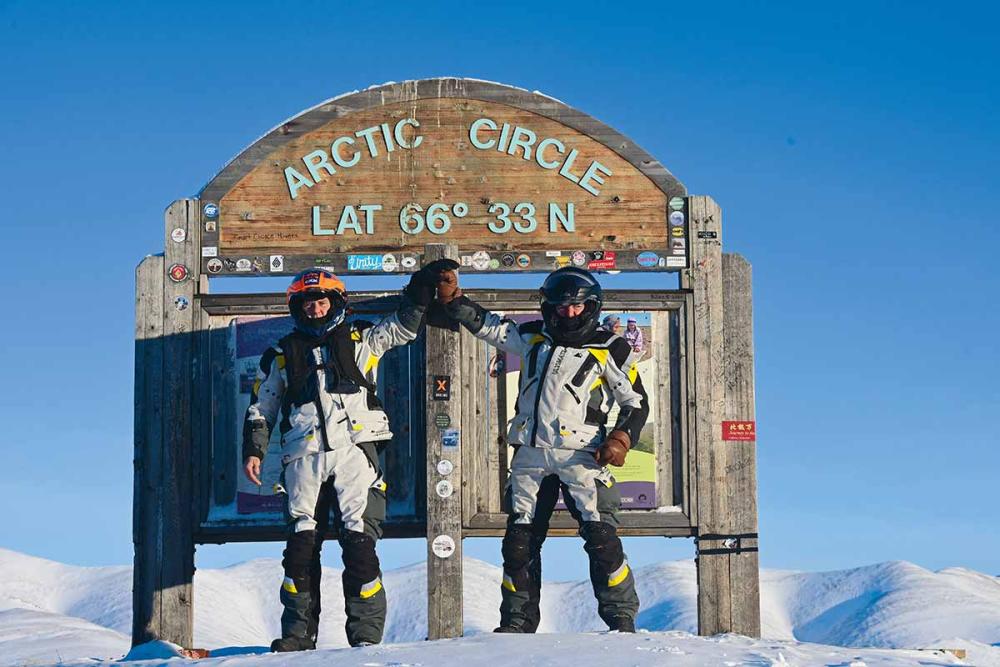
On 9 February 2025, the time has come: my friend Alex and I are standing in front of the famous town sign of Tuktoyaktuk on the Arctic Ocean. We have covered 4,000 kilometres on snow, ice and gravel.
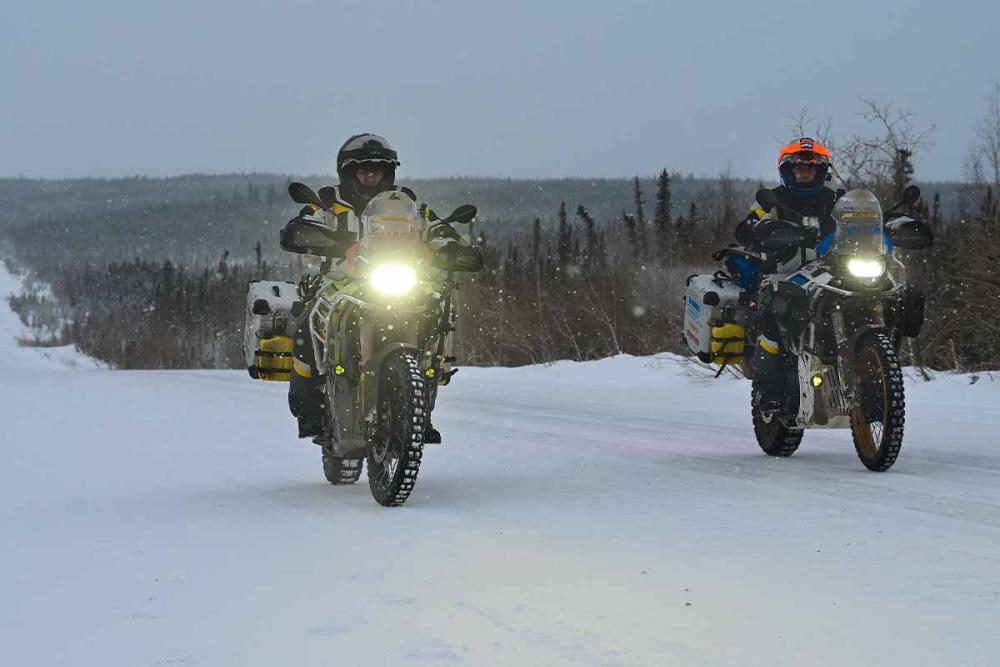
Closed snow cover shortly before Fort McPherson.
What began as an idea in Alex's workshop in Seattle in 2014 has finally become reality. We had already attempted to make our way to the far north on our motorcycles in 2022. However, due to COVID-19, the Dempster Highway was closed to tourists, and we had to turn back in Dawson City. This time, the tour was once again in jeopardy: my own motorbike couldn't be imported into Canada in time. But then BMW Motorrad Canada lent a helping hand: the importer provided us with two brand-new F 900 GS bikes, and Touratech supported us with the necessary equipment for this extreme trip. On 17 January 2025, we set off from Calgary with our ambitious goal in mind: the Arctic!
COLD TEMPERATURES THAT CHANGE EVERYTHING
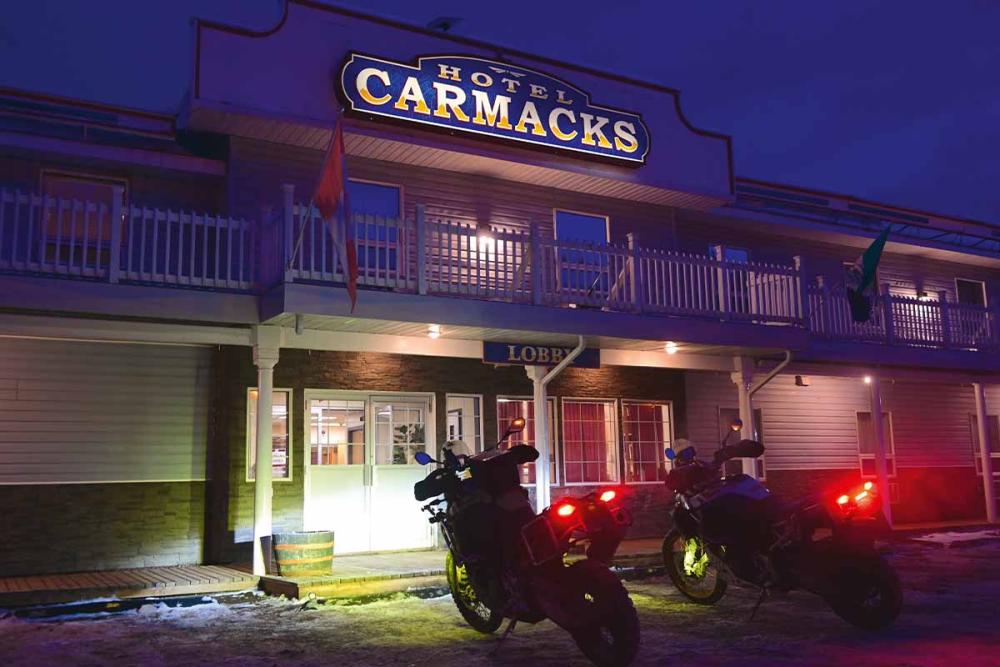
The days are short – arrival in Carmacks.
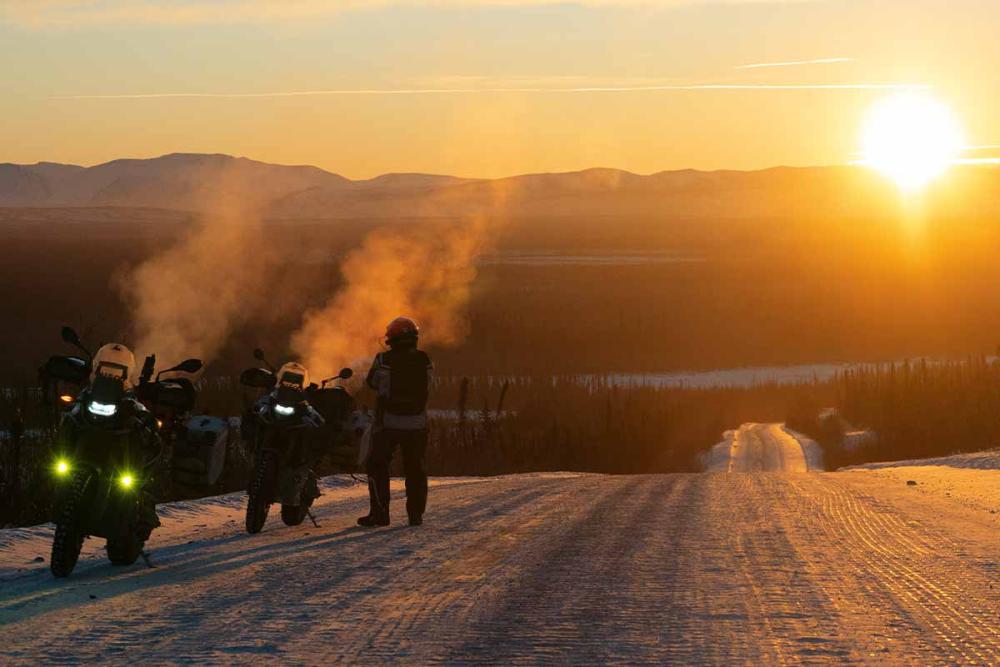
Sunset on the Dempster Highway
The first few days were harmless, considering what was still ahead of us. Plus eight to minus 16 degrees Celsius – temperatures at which motorcycling is still possible without any problems. But the further north we went, the more merciless the cold became. On the Dempster Highway, temperatures dropped to minus 38 degrees. We deliberately decided not to wear heated clothing. We wanted to conserve our batteries and do as the dog sled drivers do: layer up. But reality quickly showed us our limits. Every day of riding sapped our strength, every gust of wind cutting through our layers like a knife.
ENCOUNTERS ON THE ROAD
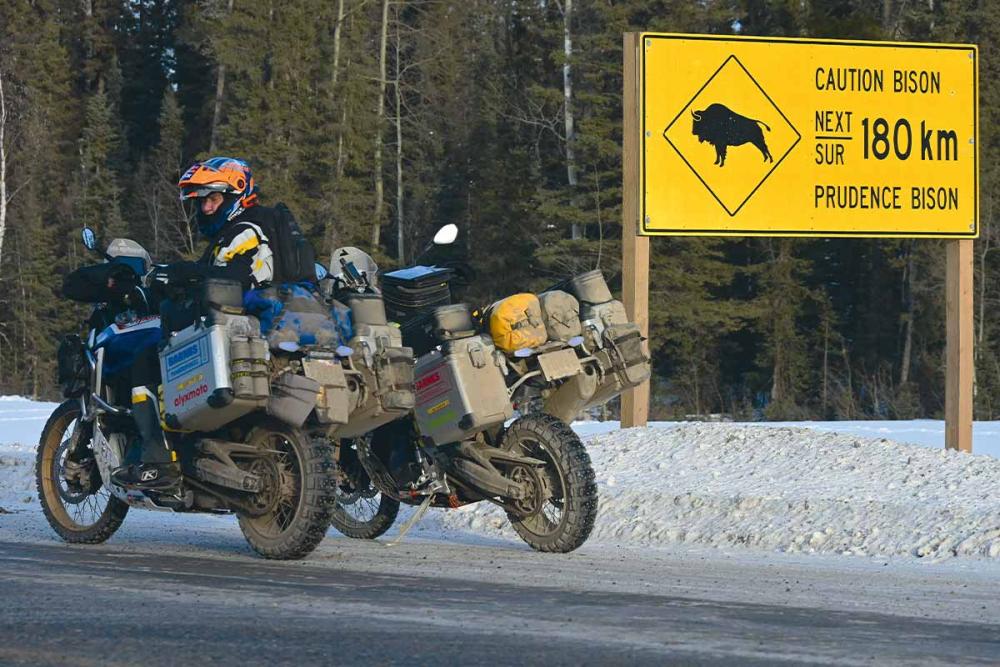
Warning of scraggy pedestrians.
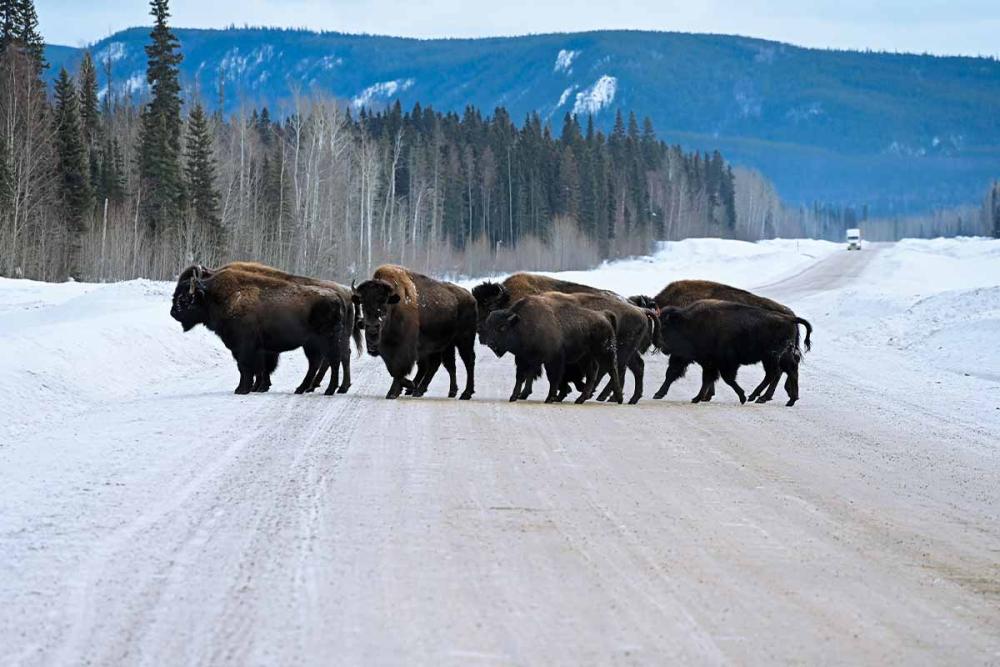
The highways to Dawson City are cleared in winter, but nature reclaims the roads. Time and again, bison or moose suddenly appeared in front of us. I remember the first bison encounter clearly: I was so focused on driving that I carelessly rolled past the enormous animal. Alex, on the other hand, stopped – and stood less than two metres away from the colossus, which was pushing the snow aside with its head.
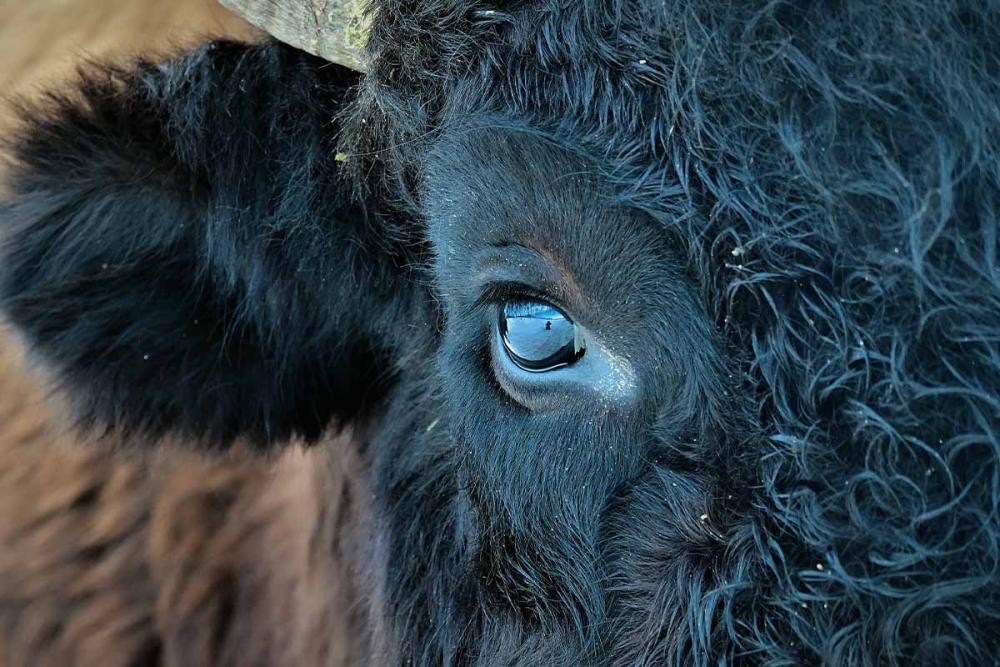
Over the next hundred kilometres, we encountered whole herds again and again. Patience was required: they often ran ahead of us for kilometres before finally letting us pass. Once, I got so close to a group that I got off my motorbike, knelt down and took a photo. When the animals calmly passed a few centimetres away from me, I held my breath. In one of the pictures, my own image was reflected in the bull's pupil – for me, the defining picture from the tour.
The moose were shyer. Here, we had to turn off the engine, approach step by step, camera at the ready. During one of these photo stops, a snowplough driver stopped next to us, rolled down his side window and shook his head: ‘You must be Germans! Who else would think of riding a motorbike here in winter?’ He was right.
BREAKDOWNS AND HOSPITALITY
Shortly before Whitehorse, I got a flat tyre. It was 25 kilometres to the nearest repair shop. The mechanics at Yukon Yamaha already knew us from 2022 and could hardly believe that the same ‘crazy Germans’ had turned up again in the middle of winter. On the way back, Alex also got a flat tyre, and we were once again welcomed like family members.
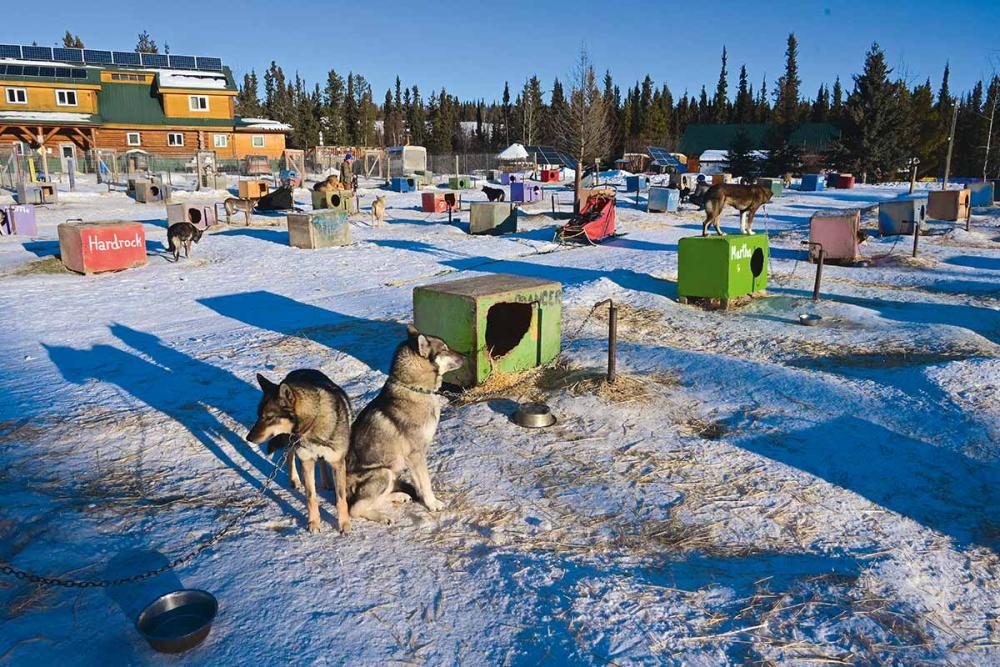
We rented a place on a dog farm for a few days, lived in a log cabin and shared our daily lives with the retired sled dogs. The colder it got, the livelier the animals became. For us, it was a little breather – before the hardest part of the journey began.
CAUGHT IN THE STORM
From Dawson City onwards, the thermometer barely rose above minus 30 degrees. From here, the Dempster Highway took us on to Eagle Plains, the last petrol station before Inuvik. Shortly afterwards, the infamous Hurricane Valley begins, where wind speeds of up to 180 km/h are not uncommon. We were stuck there for three days before the road was cleared. We drove through the snow drifts in convoy, knowing full well that the road behind us would be closed again immediately.
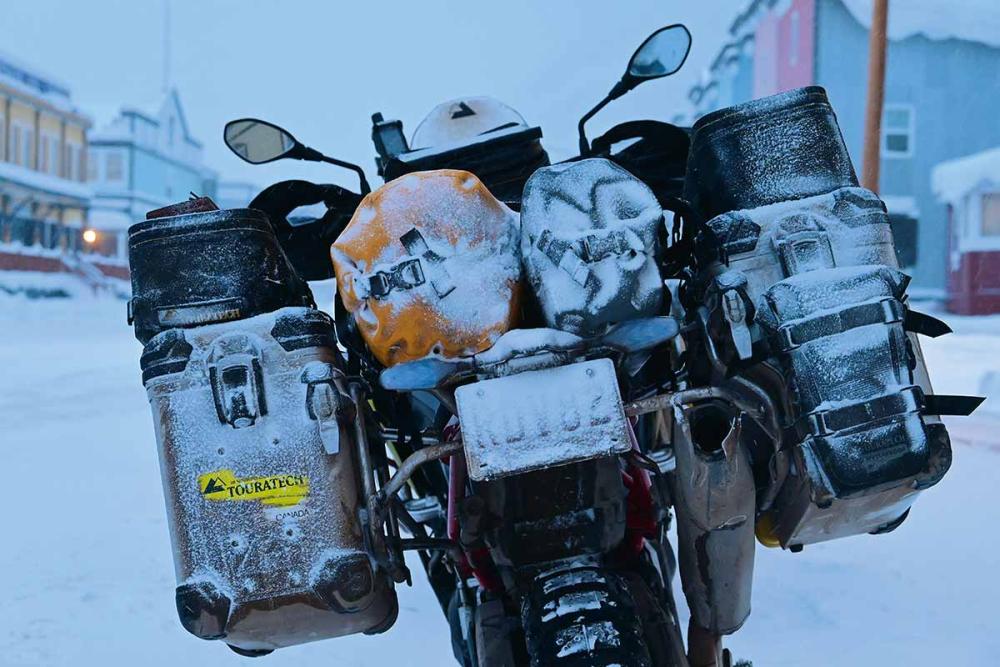
In Inuvik, the mayor welcomed us personally. Word of our tour had spread. But here, too, we had to wait. Blizzards, closed roads, health problems for Alex. Only when the weather calmed down did we venture on the last leg of our journey to Tuktoyaktuk.
‘ROBUST, VERSATILE AND COMFORTABLE MOTORCYCLE SUIT’
Alexander ‘Alyx’ Guth on the Touratech Compañero Ultimate in extreme conditions in the Canadian Arctic:
The fit was impressive despite additional thermal underwear: even with several layers, it remained stable and the protectors did not slip. Comfort also played a role away from the ride – during waiting times in the blizzard, the suit offered sufficient protection to rest in. Made from GORE-TEX Pro and Armacor, the suit withstood snow, ice, road salt and falls. Despite intensive use, the material showed no signs of wear. The light-coloured fabric gets dirty quickly, but is helpful in summer by reflecting heat.
In terms of safety, the equipment proved its worth: even in falls on ice, all protectors remained reliably in place. The ventilation worked even in changing weather conditions. With the zips open, the suit was sufficiently ventilated, which extends its range of use far beyond Arctic regions. Conclusion: The Touratech Compañero Ultimate proved itself in continuous use as a robust, versatile and comfortable motorcycle suit. Anyone planning extreme tours will find this an outfit that can withstand the stresses and strains and offers a high level of safety and suitability for everyday use.
Detailed information can be found at:
https://www.touratech.com/en/riding-gear/motorcycle-clothing/companero-ultimate.html
FINALLY AT OUR DESTINATION
We were still 148 kilometres away from the Arctic Ocean. It was the coldest day of the trip: minus 38 degrees. When we finally reached the town sign, the tension fell away. We took a few quick photos – we couldn't expose ourselves to the cold for any longer – and sought refuge in the petrol station, where we got a hot coffee.
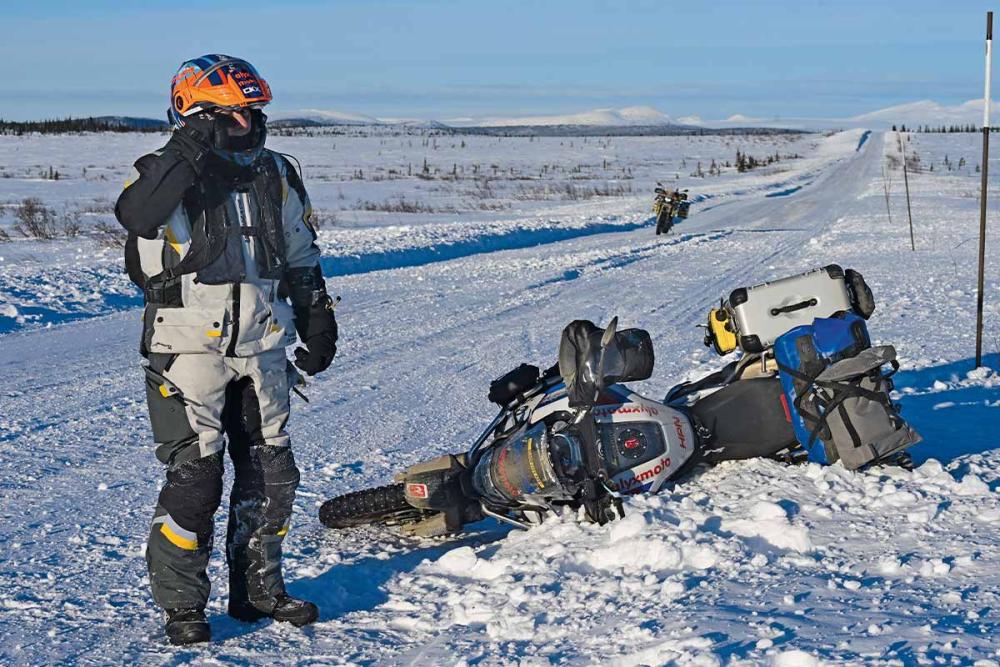
On the way back to Inuvik, we both took a tumble. Given the cold, it took much more strength than expected to lift the motorcycles back up. In the evening, after a hot shower, I collapsed into bed – and slept until the next afternoon.
BACK INTO THE WARMTH
The return journey also required patience on our part. Several more days of blizzards in Eagle Plains, then finally the drive back south. With every kilometre, the temperatures rose, and with them the certainty that we had made it.
CONCLUSION
This journey taught me humility. The cold takes an incredible amount of energy and makes every movement difficult. But the moment in Tuktoyaktuk, the encounters with the bison, the incredible hospitality along the way – all of that makes up for every hardship. And when someone asks me today why anyone would do something so crazy, I think of the snowplough driver who shouted at us: ‘You must be Germans!’ – and that probably sums it up best.
PREPARATION AND TECHNOLOGY
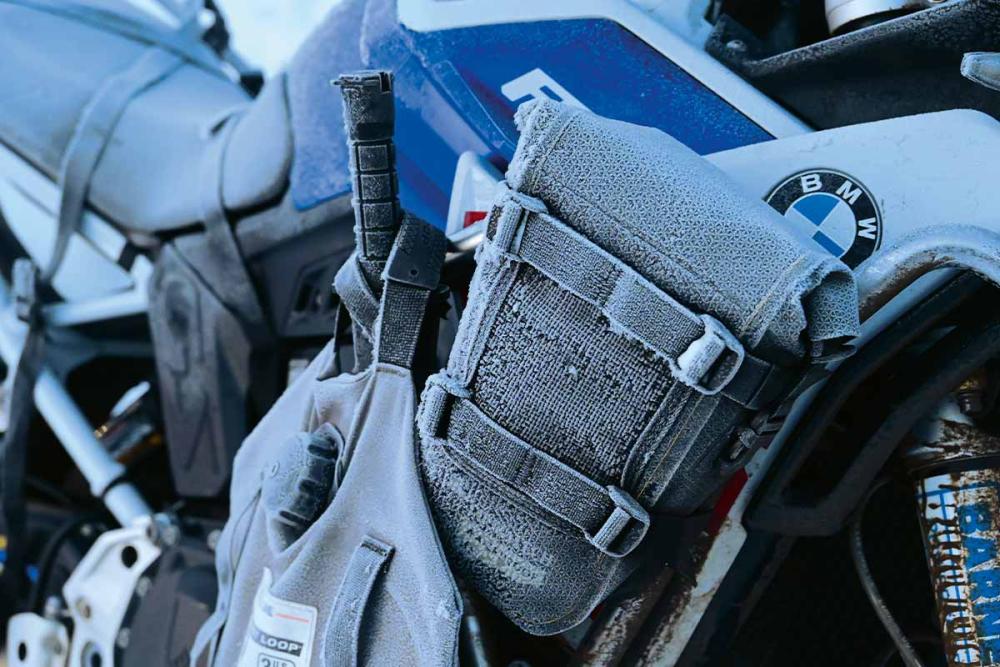
RIDER EQUIPMENT
- Helmet: CKX Mission Electric snowmobile helmet with heated visor and breathing mask
- Suit: Touratech Compañero Ultimate, windproof and waterproof, with protectors
- Boots: Snowmobile boots
- Underneath: Merino wool, down jacket
MOTORCYCLES
BMW Motorrad Canada provided two F 900 GS bikes, equipped with accessories from Touratech and other suppliers.
The most important modifications at a glance
- Touratech handlebar riser
- Snorkel filter on the airbox to keep ice and snow out
- Touratech Zega Evo X special system
- Touratech Extreme Edition pannier lid bag
- Touratech Suspension steering damper (the standard one was not adjustable and therefore unsuitable for extreme cold).
- Clearwater lights LED Model Darla (dimmable)
- Handlebar covers to keep wind, cold and wetness away from the hands
- Heat pad on the oil cooler keeps the engine oil supple (can be charged at the hotel)
- Tyres from Shinko (804 front, 805 rear). These tyres have a slightly softer rubber compound, which also makes changing tyres easier. In addition, the depth of the tread minimises the risk of the spikes pushing through. The coarse tread cleans itself when driving on loose snow.
- Spikes. In total, we installed approximately 700 spikes in lengths of 2, 4 and 5 millimetres per motorcycle, 500 on the rear wheel and 200 on the front wheel.
- Replacement of the gearbox oil with a special oil for snowmobiles with a viscosity of 0–40 (winter mixture).
- Coolant with 60 per cent antifreeze content
ROUTE
The route led from Calgary via Whitehorse to Dawson City and on along the Dempster Highway to Tuktoyaktuk on the Arctic Ocean. We drove exclusively on cleared main roads, as side roads are impassable in winter.
SUPPLIES & ACCOMMODATION
We spent most nights in lodges and hotels, and occasionally in tents with expedition sleeping bags (comfort range down to –30 °C) and special self-inflating sleeping mats. We kept water (also for preparing trekking food) liquid in thermos flasks. In the evenings, a ‘Jägermeister on the rocks’ sometimes helped against the cold.
DRIVING TECHNIQUE
- Spikes allow you to drive on ice but require gentle acceleration and careful braking manoeuvres.
- Drive with care.
- Use the front brake sparingly and allow for long braking distances.
- Use boot spikes when parking to avoid falling on bare ice.
- Familiarise yourself with the position of the controls on the handlebars, as they are not visible due to the cuffs and are difficult to feel with thick gloves.
